ITALY, country of south-central Europe, occupying a peninsula that juts deep into the Mediterranean Sea. Italy comprises some of the most varied and scenic landscapes on Earth and is often described as a country shaped like a boot. At its broad top stand the Alps, which are among the world’s most rugged mountains.Italy’s highest points are along Monte Rosa, which peaks in Switzerland, and along Mont Blanc, which peaks in France. The western Alps overlook a landscape of Alpine lakes and glacier-carved valleys that stretch down to the Po River and the Piedmont. Tuscany, to the south of the cisalpine region, is perhaps the country’s best-known region. From the central Alps, running down the length of the country, radiates the tall Apennine Range, which widens near Rome to cover nearly the entire width of the Italian peninsula. South of Rome the Apennines narrow and are flanked by two wide coastal plains, one facing the Tyrrhenian Sea and the other the Adriatic Sea. Much of the lower Apennine chain is near-wilderness, hosting a wide range of species rarely seen elsewhere in western Europe, such as wild boars, wolves, asps, and bears. The southern Apennines are also tectonically unstable, with several active volcanoes, including Vesuvius, which from time to time belches ash and steam into the air above Naples and its island-strewn bay. At the bottom of the country, in the Mediterranean Sea, lie the islands of Sicily and Sardinia.
As the birthplace of the Roman Empire and the Renaissance, it’s not surprising that Italy should be so rich in masterpieces of art and architecture, or that it should have more UNESCO World Heritage cultural sites than any other country in the world. But Italy’s top attractions for tourists are not all art and architecture; the country is blessed with lakes, mountains, and a dramatic coastline that give it outstanding natural attractions, as well. This list of top places to visit is only the beginning of outstanding things to see and do in Italy.
COLOSSEUM
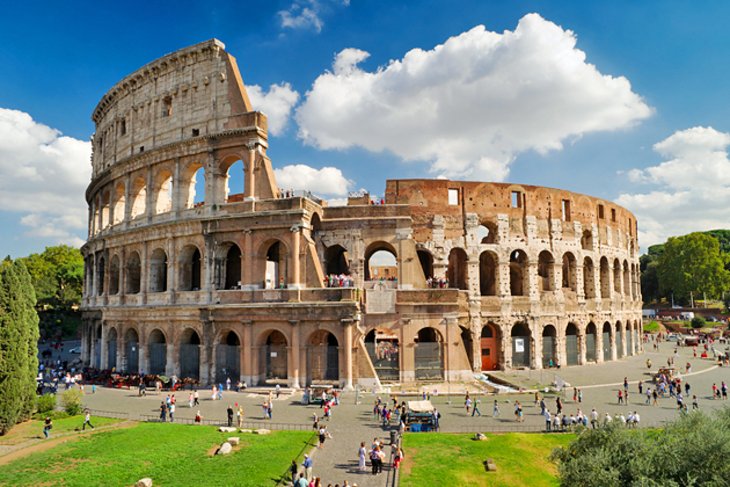
For travelers making their way through Italy, the Colosseum is a must see. This huge Amphitheater is the largest of its kind ever built by the Roman Empire and has remained a model for sports facilities right up to modern times. Built as a venue for public spectacles and shows – even mock sea battles, it had a wooden floor that was 83 by 48 meters. Underneath it were two stories of tunnels, rooms, cells, and passages for gladiators, workers, wild animals, and storage. Today, the structure stands in stark contrast to the modern development that surrounds it and is a prominent reminder of ancient times and the extensive history of Rome.
VENICE CANALS
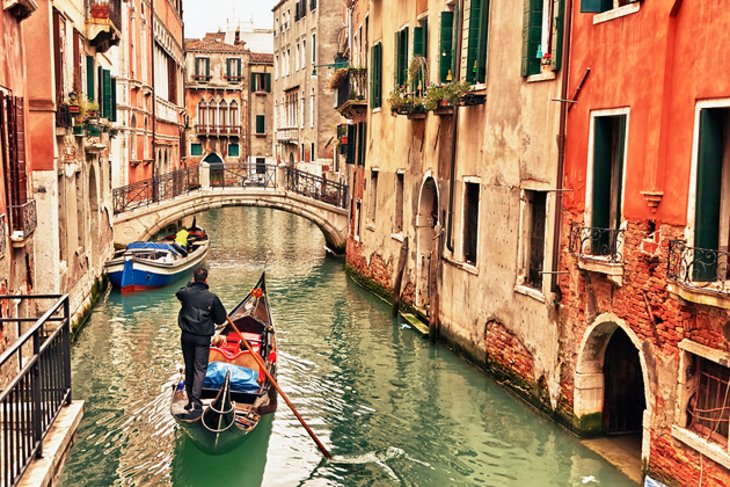
A gondola ride through the canals of Venice is a tradition that travelers have been enjoying for centuries. Venice is a city of islands, and the canals have long been the city’s main streets, connected by a labyrinth of narrow passageways. Lining the canals are old buildings that have remained relatively unchanged for hundreds of years, adding to the romantic charm. The Grand Canal is the most famous of these waterways and one of the most photographed sites in Venice. The best way to see many of the grand palaces, whose fronts face the water, is from a Vaporetto ride along the Grand Canal.
Accommodation: Where to Stay in Venice: Best Areas & Hotels
POMPEII
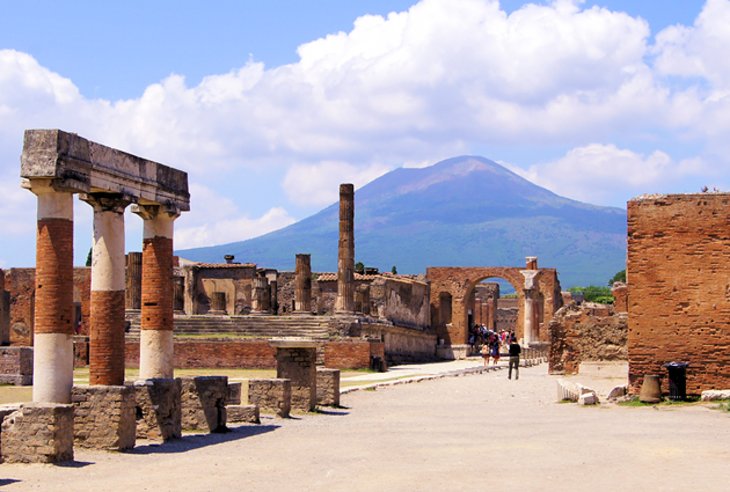
The still smoking volcano of Mt. Vesuvius looks down on the remains of the city it destroyed in AD 79. But that same eruption also preserved many of the city’s art treasures: frescoes, mosaics, and sculptures that were encased in the lava as it cooled. Several centuries of excavations have revealed the remains of houses, markets, baths, temples, theaters, streets, and human remains. Visitors can tour the site, walk along the old streets scarred by the tracks of chariots, and see the engineering used by Romans more than 2,000 years ago.
LEARNING TOWER OF PISA
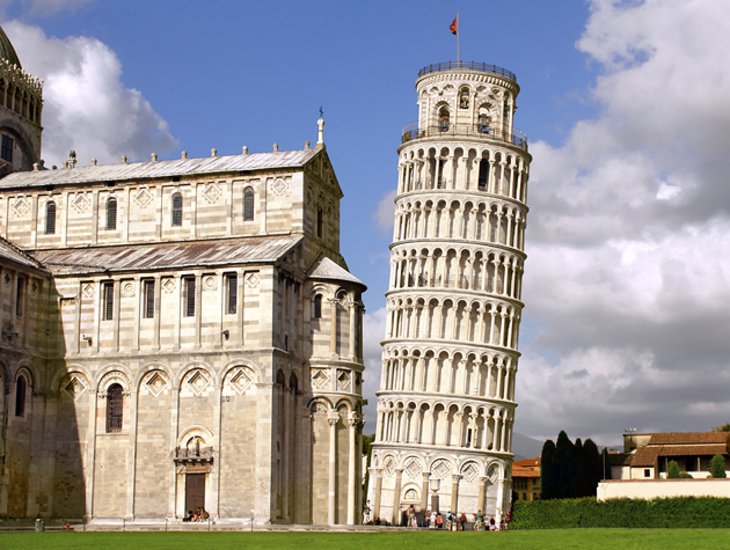
The Leaning Tower of Pisa is actually just one of many attractions in the city of Pisa, but its fame, gained from its flaw, is world renown. Work began on the tower in the 1100s, and the sinking, which led to the lean, began by the time the tower reached the third story. Prior to restoration work in the 1990s, it was predicted to topple over by the year 2000. Today, visitors can climb up the stairs of the tower for a fabulous view over the city. The Leaning Tower, also known as La Torre Pendente, stands on the Piazza dei Miracoli, a setting it shares with the beautiful Romanesque Cathedral of Santa Maria Assunta and a round freestanding baptistery. Each of these features outstanding works of medieval stone carving.
TUSCAN HILL TOWNS
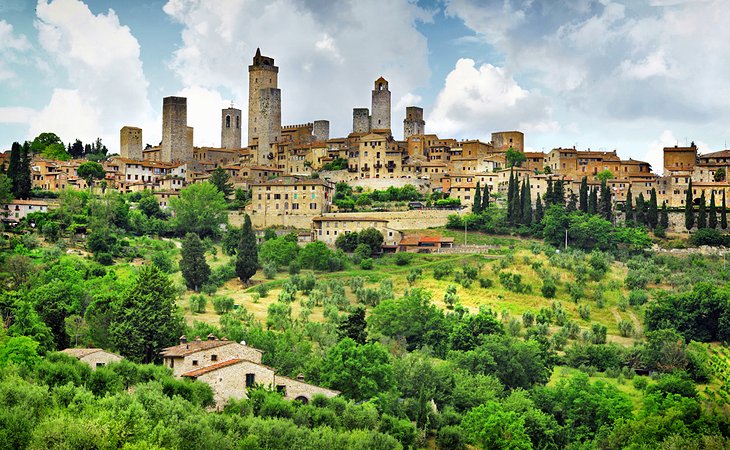
The undulating landscape of Tuscany is crowned by stone towns whose foundations go back to the Etruscans. Each sits atop a hill, and many still have the castles and towers that once defended their commanding positions.
It’s difficult to choose one above the others, as each has its own architecture, art, character, and story to tell. Fairly bristling with towers and enclosed in walls that are largely intact, San Gimignano looks much as it did in the Middle Ages, when it was an important stop on the pilgrims’ route to Rome. Volterra was an important Etruscan center before the Romans came and still has remains of both civilizations today. The tourist attractions of Arezzo are the legacy of the many artists, architects, and poets who lived there.
Like Volterra, walled Cortona was an Etruscan settlement and later a Roman one, but adds reminders of its Florentine past as well. Cortona is one of Italy’s oldest towns. The proximity of these hill towns to the cities of Florence, Siena, Pisa, and Luca fills Tuscany with a concentration of many of the best places to visit in Italy.
LAKE COMO
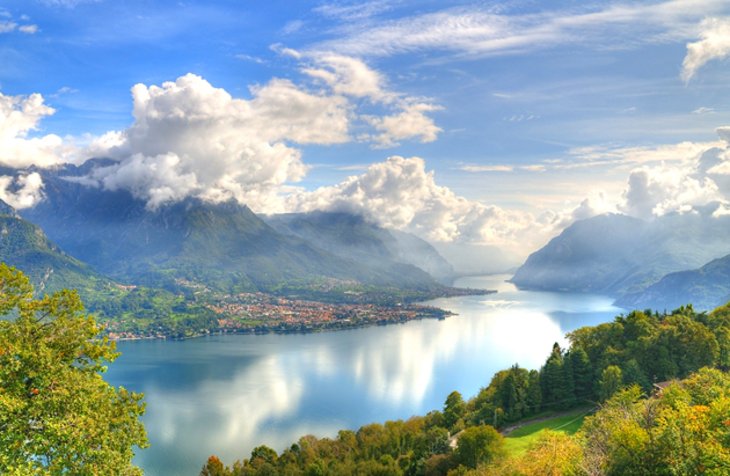
Lake Como is one of Italy’s most scenic areas, surrounded by mountains and lined by small picturesque towns. A haunt of the wealthy since Roman times, the lake has many opulent villas and palaces along its wooded shores, many of them surrounded by gardens that are open to the public. The mild climate that makes the lake shore ideal for gardens is also a draw for tourists, with characteristics similar to that of the Mediterranean. Along with the resort towns around the lake, there’s an 11th-century abbey
MILAN
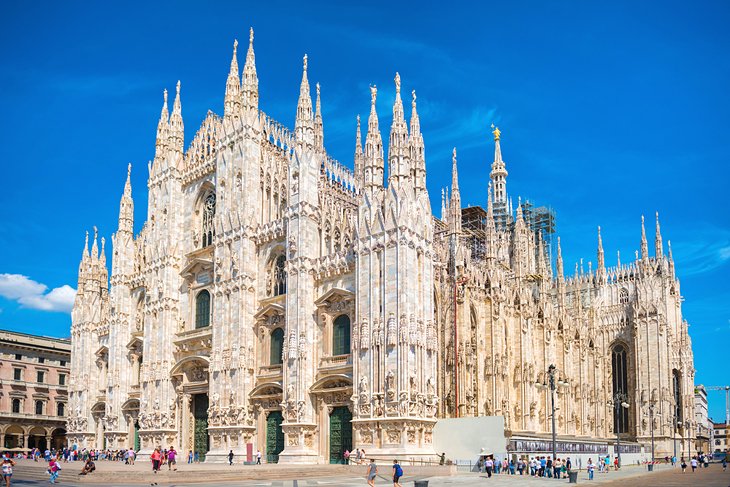
Although Milan is a major entry point for tourists because of its airport, it’s often overlooked as a destination of its own. That’s a shame, because Milan has one of the highest concentration of artistic and architectural attractions in all Italy, and for those interested in design and fashion (not to mention shopping), it’s a must. Milan has been the home and work place for luminaries in all these fields: Michelangelo, Leonardo da Vinci, Verdi, Enrico Caruso, Toscanini, and designer Giorgio Armani.
Il Duomo, Milan’s massive cathedral, is among the world’s most magnificent churches, and finest example of the Flamboyant Gothic style. La Scala is the world’s most prestigious opera house, Da Vinci’s The Last Supper fills the wall at a monastery, and throughout the city are museums and palaces filled with some of the world’s finest art. And no fashionista can resist a stroll through the famed Quadrilatero.
AMALFI COAST
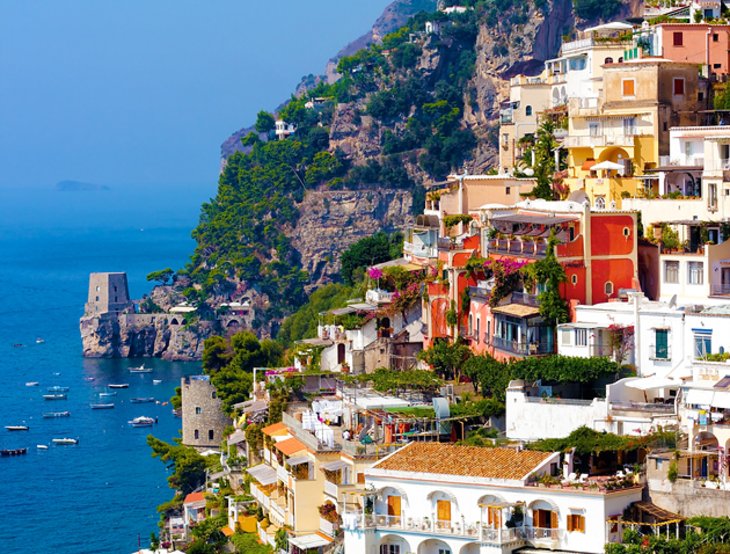
The Amalfi Coast, a UNESCO World Heritage Site, is a stunning stretch of coastline along the Sorrentine Peninsula, south of Naples and Sorrento. Hillside towns are built precariously along the steep mountainsides that cascade down to the sea. The main towns along here are Positano and Amalfi, with its colorfully domed cathedral. You can tour the coast by road or hop between towns by boat for different perspectives of the dramatic and almost vertical shore.
THE CINQUE TERRE
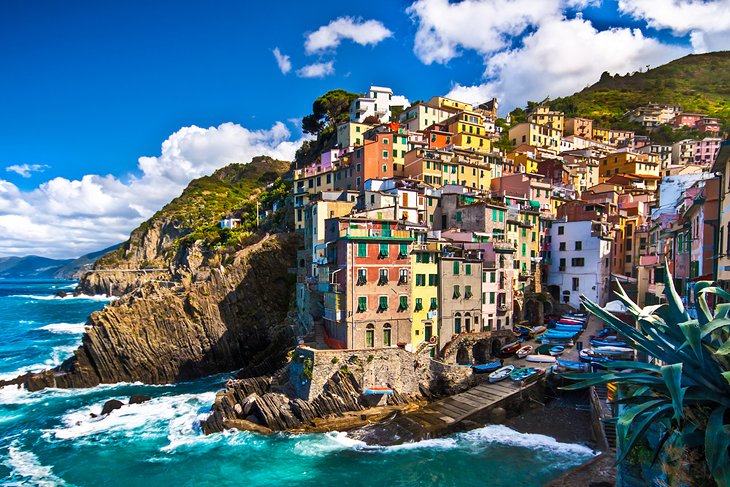
The five towns that cling to the steep, rocky Mediterranean coast north of La Spezia were almost impossible to reach by land until the railway connected them by tunneling through the headlands that separate them. Today, the trail along the cliffs that locals once used to travel from town to town is one of Italy’s great hikes; the shortest and widest of its sections, between Manarola and Riomaggiore is known as the Via dell’Amore
Florence Duomo Santa Maria del Fiore
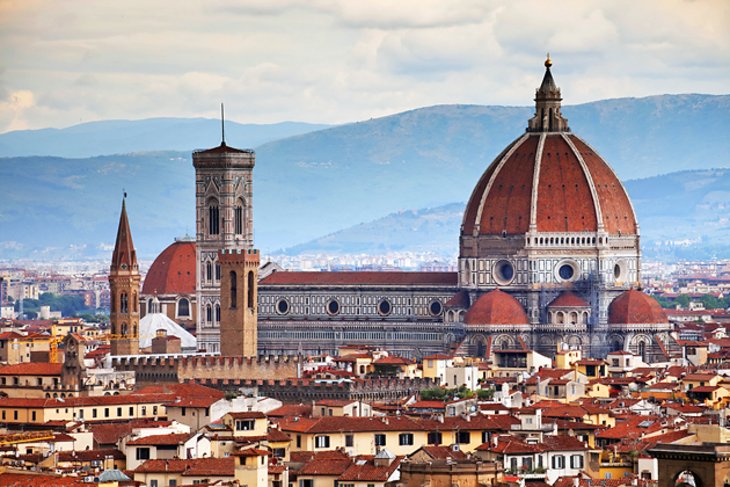
Regarded as one of the finest cathedrals in the world, the Duomo Santa Maria del Fiore, or the Cathedral of Santa Maria del Fiore, dominates the Florence skyline. The cathedral was built between the 13th and 15th centuries, with the most famous piece being the extraordinary dome, completed by Filippo Brunelleschi in 1434. The cathedral’s bell tower stands close beside the cathedral in Piazza del Duomo, covered in the same patterned marble typical of Tuscan Romanesque architecture. Designed by Giotto, the campanile stands 82 meters tall and can be climbed. Its 414 steps lead up to a viewing platform with fantastic views of the city. Opposite the Duomo is a magnificent baptistery, famed for its bronze paneled doors.
VERONA
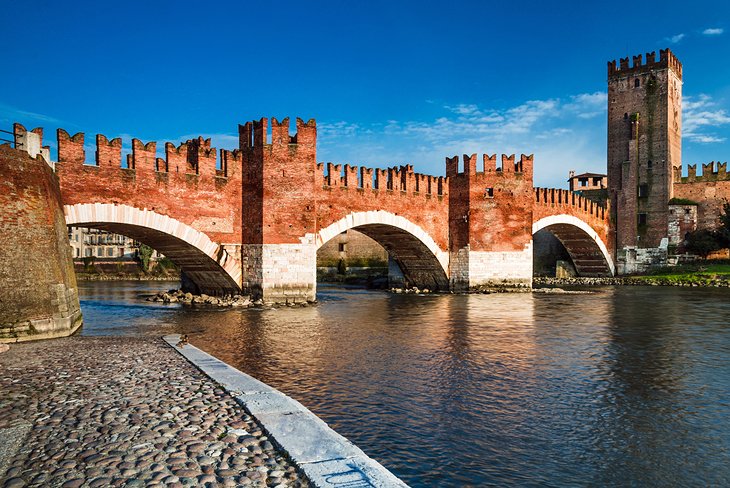
The compact historic center of this former Roman stronghold is embraced by a deep curve in the Adige River. Dominating its heart is the remarkable well-preserved first-century Roman arena, scene of the world-renowned summer opera festival. Several Roman arches are mixed among the medieval and Renaissance buildings, many of which show Verona’s long history as part of the Venetian empire.
Alongside the river stands the large Castelvecchio, a castle built in the 14th century, guarding a brick arched bridge, Ponte Scaligero. For all its rich treasury of architecture and art, Verona’s biggest claim to tourist fame is based on pure fiction. It was the setting for Shakespeare’s Romeo and Juliet, and over the past century, locals have obliged by creating homes, a balcony, and even a tomb for the fictional characters.
 TRAVEL IN ITALY